Chapter 3: When the Internet Turned Data Centers Into an Industry

Something strange happened to the computer in the 1980s.
It escaped.
For decades, computers had been prisoners of special rooms.
First came ENIAC.
Thirty tons of electronics occupying an entire room at the University of Pennsylvania.
Then came the mainframe era.
IBM and others brought computing into corporate America, but the machines still lived behind locked doors, surrounded by technicians, cooling systems, cables, and specialized electrical equipment.
Computing was centralized.
Expensive. Rare. And controlled by specialists.
Then the personal computer arrived.
Suddenly the computer didn’t need its own room.
It could sit on your desk.
And at first glance, that looked like terrible news for the data center.
Why would corporations continue building giant centralized computing facilities if computers were becoming smaller, cheaper, and more powerful?
Why maintain enormous mainframes when employees could have computers sitting right in front of them?
It was a perfectly logical question. It was also completely wrong.
Because the personal computer wouldn’t kill the data center.
It would help create an explosion in demand for them.
And the reason was simple.
Eventually, all those computers wanted to talk to each other.
The Computer Gets Personal
On August 12, 1981, IBM introduced the IBM Personal Computer.
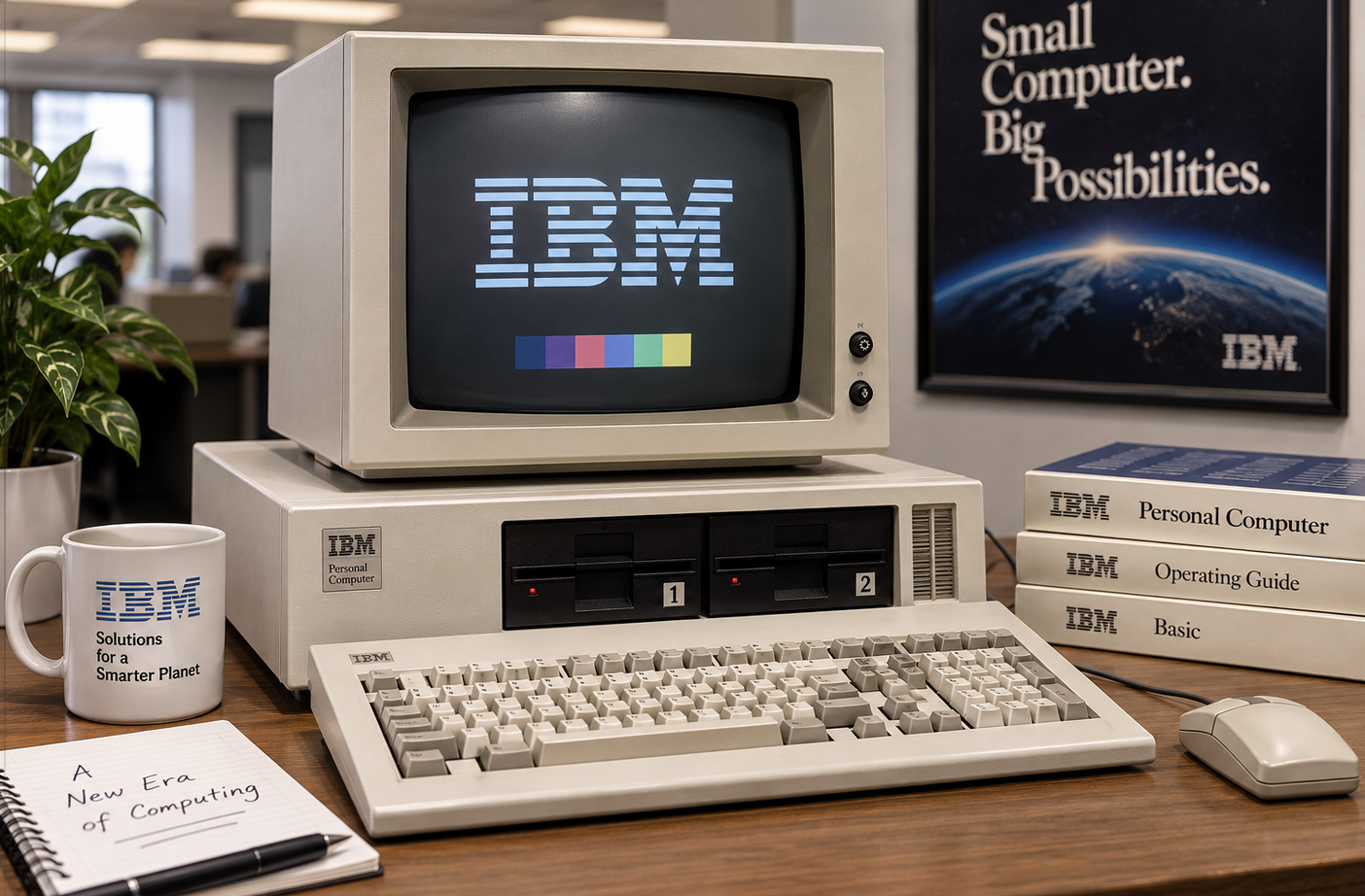
It wasn’t the first personal computer.
Apple and others were already pushing computing onto desktops.
But IBM’s entrance sent an unmistakable message to corporate America:
The PC was here to stay.
During the years that followed, computers began appearing everywhere.
Offices. Schools. Universities. Government agencies.
And eventually, homes.
Businesses that once might have shared access to centralized computing resources could increasingly put computing power directly into the hands of individual employees.
It was a profound change.
But something interesting happened as those PCs multiplied.
Companies needed a way for them to share information.
They needed employees to access the same files. They needed printers. They needed storage.
And they needed all these scattered computers to communicate.
So businesses began connecting them through local area networks.
Then those networks needed machines dedicated to serving the other computers.
Servers.
And those servers needed somewhere to live.
The data center was about to evolve again.
The Best Free Investment You’ll Ever Make
Join Wealth Daily today for FREE. We’ll keep you on top of all the hottest investment ideas before they
hit Wall Street. Become a member today, and get our latest free report: “The $10 Trillion AI Infrastructure Boom.”
It contains full details on why money managers are overpaid and provides you with
tools for growing your wealth.On your own terms. No fees, no commission.
The Rise of the Server Room
By the late 1980s and early 1990s, businesses increasingly relied upon a new computing architecture.
Instead of everything happening inside one enormous mainframe, computing tasks could be distributed between personal computers and centralized servers.
This became known as client-server computing.
Your desktop computer was the client. The server sat somewhere else. The server might store your files. Run your company’s database. Handle email. Back up information.
One server became two. Two became 10. Ten became dozens.
And before long, companies discovered something that would sound very familiar today…
All these computers needed a lot of infrastructure.
Servers produced heat. They consumed electricity. They required network connections. They needed backup power. They needed cooling. They needed physical security. They needed people to maintain them.
The old mainframe computer room hadn’t disappeared.
It was evolving.
Rows of enormous mainframes increasingly gave way to rows of smaller servers.
And then came something that would change the world forever.
August 6, 1991
On August 6, 1991, British computer scientist Tim Berners-Lee published information about a project he had been developing at CERN.
It was called the World Wide Web.
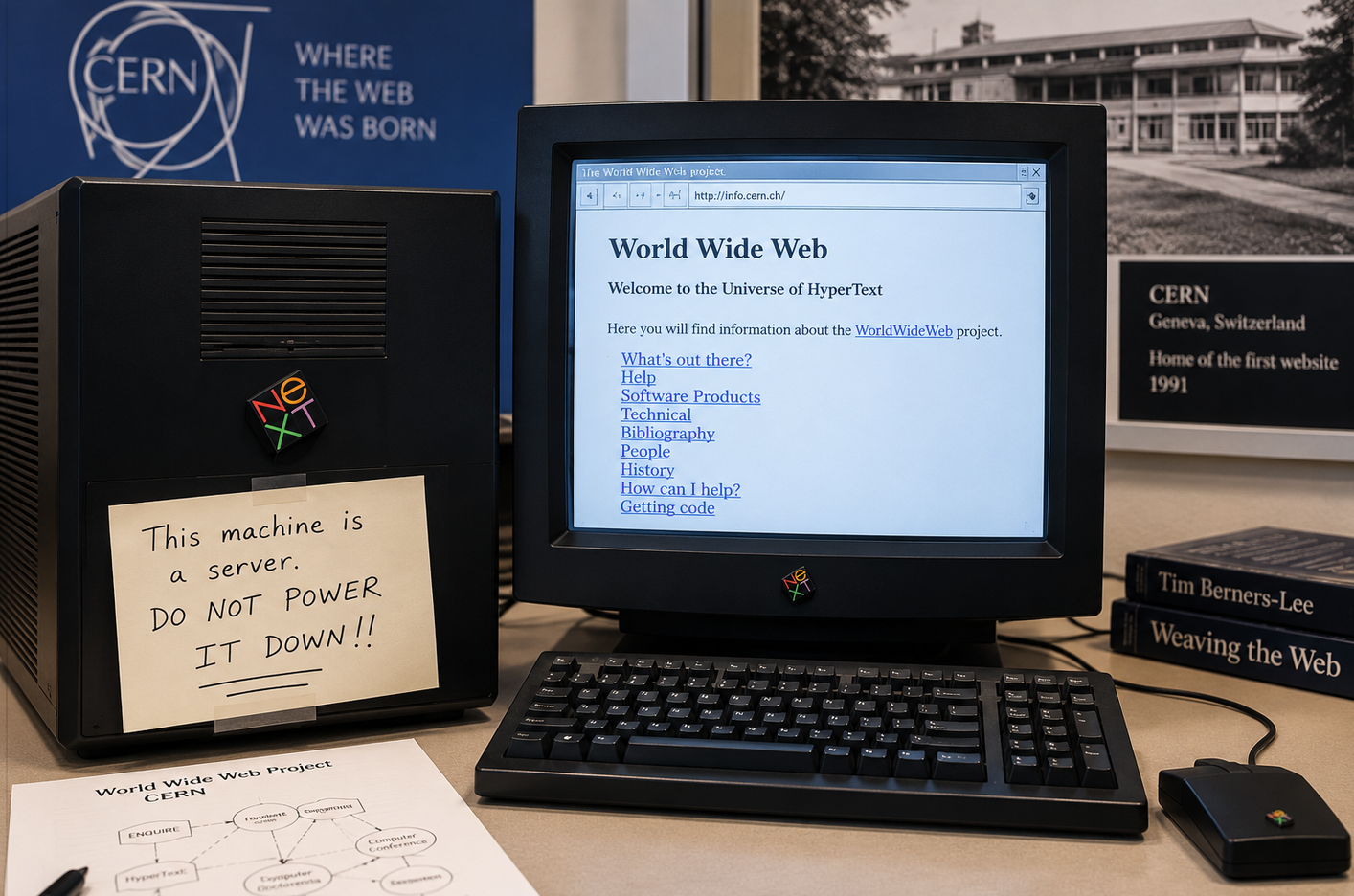
At first, almost nobody noticed.
There were no newspaper headlines declaring that the global economy had just changed forever.
But it had.
Berners-Lee had helped create a system that allowed information stored on computers to be connected through hyperlinks and accessed across the internet.
The idea sounds almost laughably ordinary today.
At the time, it was revolutionary.
Because computers weren’t merely going to communicate inside an office anymore.
Computers around the world were going to communicate with one another.
And that changed the economics of computing forever.
Suddenly, Every Company Needed a Front Door
By the middle of the 1990s, businesses began hearing a strange new phrase: “You need a website.”
At first, plenty of executives probably thought it was ridiculous.
Customers could simply call. Or visit a store. Talk to a salesperson. Send a fax.
Then something happened. Customers started going online.
And once they did, businesses followed.
Suddenly a company’s website became its digital storefront.
And unlike a physical storefront, that digital storefront couldn’t close at 5 p.m.
People might visit it at midnight.
Or 3 a.m. Or from another country.
The computer infrastructure behind the business now had to operate 24 hours a day, seven days a week, 365 days a year.
That was a monumental change.
Because once businesses became dependent upon the internet, downtime became expensive.
Servers couldn’t simply work most of the time.
They had to work all the time.
And that required better infrastructure.
Suddenly the room containing the computers was becoming one of the most important rooms in the company.
Sound familiar? It should.
Because we are watching exactly the same economic progression with artificial intelligence today.
First, the technology is interesting.
Then it becomes useful. Then businesses adopt it. Then customers expect it. Then businesses become dependent upon it.
And once that happens…
The infrastructure becomes mission critical.
Then Came the Gold Rush
By the late 1990s, Wall Street had discovered the internet.
And all hell broke loose.
Internet startups were appearing everywhere:
Amazon
Yahoo
eBay
AOL
Excite
GeoCities
Pets.com
Webvan
Priceline
Companies rushed online. Venture capital poured into startups. Technology stocks exploded.
And investors became convinced that virtually anything with “.com” attached to its name represented the future.
Some did. Many didn’t.
But behind all that speculation was something very real.
Infrastructure was being built.
Millions of people coming online required servers. Servers required data centers. Data centers required fiber. Fiber required telecommunications networks. Telecommunications networks required enormous amounts of capital.
The internet wasn’t magic.
It had to be physically constructed.
Under streets. Across states. Under oceans. Inside buildings. Into server racks. Through switches and routers.
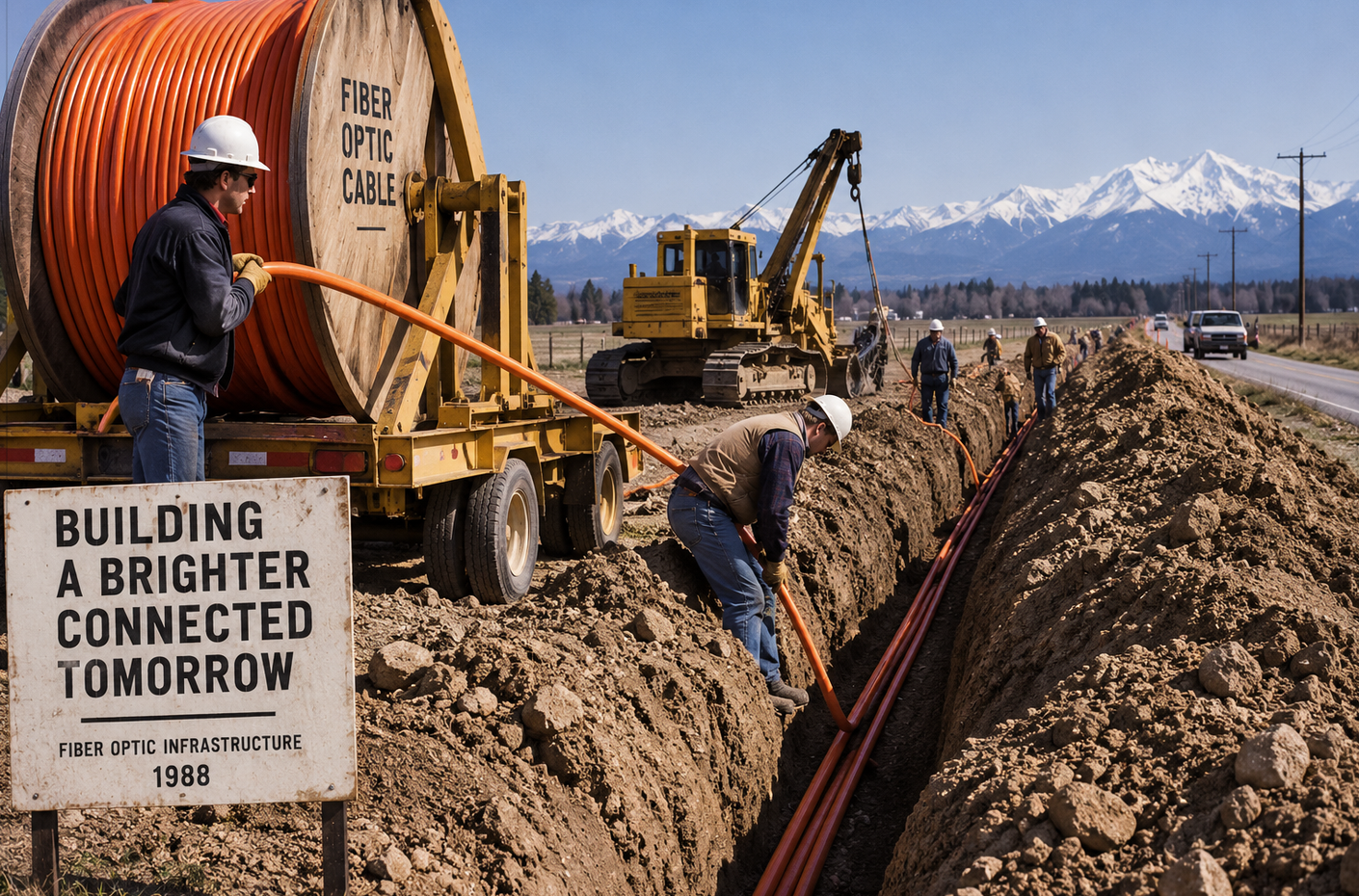
Into millions of homes and businesses.
This is one of the most important lessons of the entire technology boom.
The digital economy required an enormous physical economy underneath it.
Exactly as artificial intelligence does today.
Then the Bubble Burst
And this is where the story becomes particularly interesting today.
Because by 1999 and early 2000, the internet boom had become a mania.
Companies with questionable business models commanded enormous valuations.
Data centers were being constructed to accommodate internet traffic that was expected to grow for decades.
Investors assumed the good times would continue forever.
They didn’t.
The Nasdaq peaked in March 2000.
Then technology stocks collapsed. Hundreds of internet companies disappeared. Billions of dollars evaporated.
Data center capacity suddenly looked overbuilt.
Fiber networks that had been constructed for an expected explosion in traffic sat underutilized.
The critics appeared vindicated.
We built too much.
Sound familiar?
Today we’re hearing many of the same arguments about artificial intelligence.
Maybe they’re right about some of it.
History tells us they probably are.
There will almost certainly be bad investments.
Companies will fail. Capital will be wasted. Technology will change. Some facilities may become obsolete.
But that’s not the most important lesson from the dot-com crash.
The most important lesson is what happened afterward.
The Companies Died… The Infrastructure Didn’t
This is the part of the story I want MoneyQuake readers to remember.
Pets.com disappeared. Webvan disappeared. Excite disappeared.
Dozens upon dozens of internet companies vanished.
But the fiber-optic cable remained in the ground. The networking equipment remained. The telecommunications infrastructure remained. The data centers remained. The engineers remained. The knowledge remained. The internet remained.
And then something extraordinary happened.
People discovered even more things to do with it.
Google expanded. Amazon survived. Online banking exploded.
Digital advertising went hyperbolic. Streaming video arrived.
Social media was spreading like the flu.
Then smartphones arrived. E-commerce exploded. Software moved online. Entire industries digitized.
Internet traffic didn’t disappear because the dot-com bubble burst.
It exploded.
The speculative bubble had been wrong about many individual companies.
But it had been remarkably right about the underlying technological direction.
That’s a distinction investors often miss.
A technology can be revolutionary…
While simultaneously attracting too much speculative capital.
The railroad boom did it. The internet did it. And artificial intelligence may very well do it too.
The Great Paradox of Technology
Here’s the paradox.
When computers became smaller, we needed more data centers. When storage became cheaper, we stored more data. When bandwidth became cheaper, we consumed more bandwidth. When computing became cheaper, we found more things to compute.
Every technological improvement expanded the market.
And that’s precisely what I believe is beginning to happen with artificial intelligence.
AI models will become cheaper to operate. Chips will become more powerful. Energy efficiency will improve. Algorithms will become more efficient.
And many people assume that means we’ll eventually need fewer AI data centers.
History suggests the opposite.
Because cheaper intelligence should create entirely new applications for intelligence.
Robotics
Autonomous vehicles
Drug discovery
Manufacturing
Financial services
Defense
Education
Engineering
Digital assistants
Scientific research
Energy management
Millions of AI agents performing billions — or eventually trillions — of tasks.
The cost of an individual computation may fall dramatically.
But the number of computations demanded by the economy could explode.
That’s the lesson of the internet.
And it’s the lesson investors should keep in mind as they look at today’s enormous AI infrastructure build-out.
The Road to $31 Trillion (and Beyond)
Now we can see the progression more clearly.
1946: ENIAC
The computer requires a room.
1960s and 1970s: The Mainframe
Corporations build dedicated computing centers.
1980s: The Personal Computer
Computing spreads to millions of desktops.
1990s: The Internet
Those computers become connected.
And once they become connected, the amount of infrastructure required to support them explodes.
Server rooms become data centers. Data centers become commercial businesses. Fiber networks spread across the planet.
Computing becomes something the global economy increasingly cannot function without.
But the biggest transformation was still ahead.
Because during the early 2000s, companies would begin asking a revolutionary question…
Why should we own all these computers at all?
Why buy servers?
Why maintain them?
Why build data centers?
Why not simply rent computing power whenever we need it?
That question would give birth to one of the most powerful business models in modern economic history.
It would transform Amazon from an online retailer into an infrastructure giant.
It would help make Microsoft one of the most valuable companies on Earth.
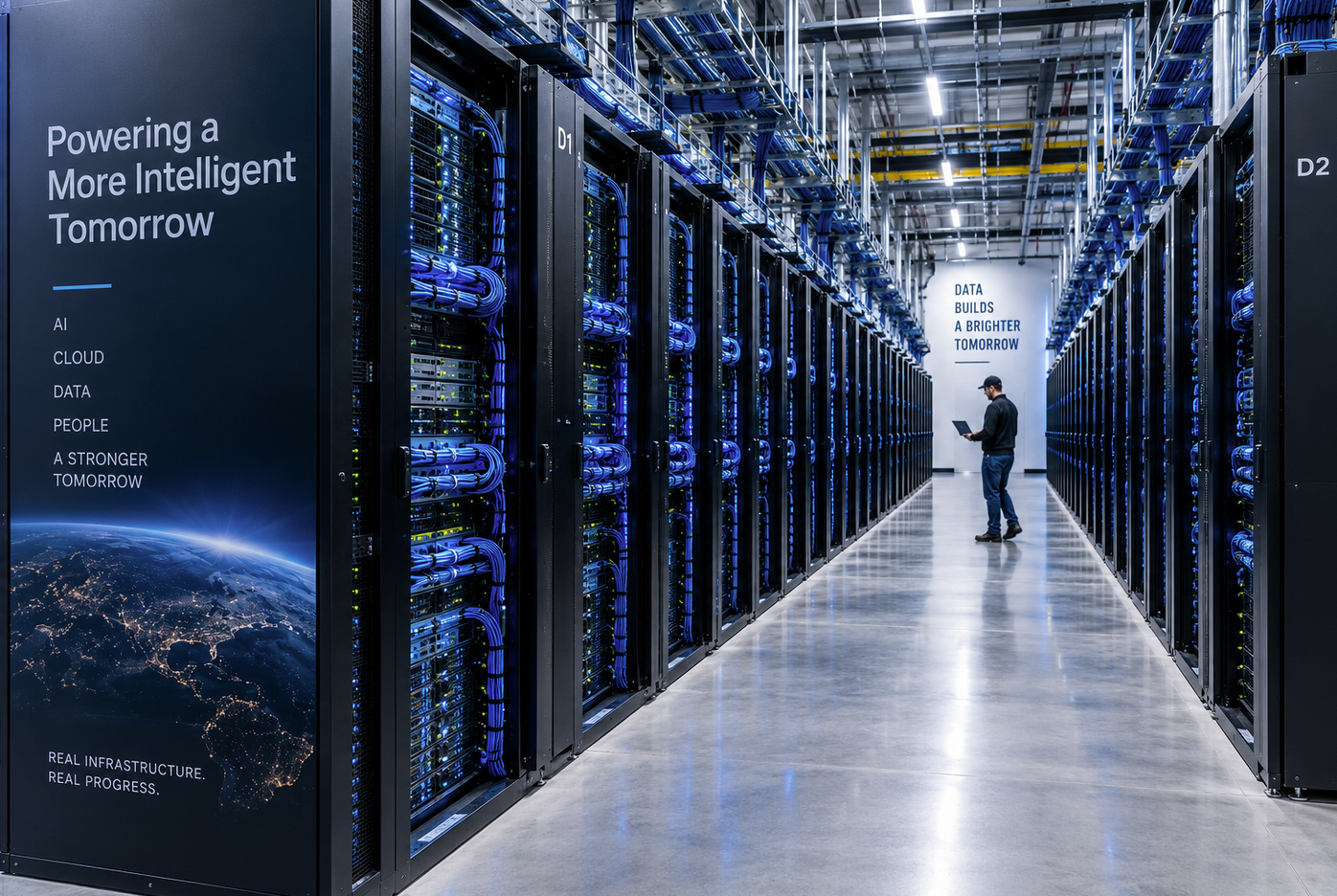
It would create facilities containing hundreds of thousands of servers.
And eventually it would give us a new word for an enormous collection of very physical machines: the cloud.
That is where we’re headed next.
“Chapter 4: The Cloud Was Never in the Sky.”
Get to the good, green grass first…
The Prophet of Profit,

Brian Hicks
 Check us out on YouTube!
Brian is a founding member and President of Angel Publishing. He writes about general investment strategies for Wealth Daily and Energy and Capital. Brian is the managing editor and investment director of R.I.C.H Report (Retired Independent Carefree Healthy), New World Assets and Extreme Opportunities. For more on Brian, take a look at his editor’s page.
The Best Free Investment You'll Ever Make
We never spam! View our Privacy Policy
After getting your report, you’ll begin receiving the Wealth Daily e-Letter, delivered to your inbox daily.
Angel Publishing Investor Club Discord - Chat Now
Brian Hicks Premium
Introductory

Advanced


